Save 10% on our Zipline + Rafting combo! Save big on double the adventure!
Save 10% on our Zipline + Rafting combo! Save big on double the adventure!
Let’s be real, rafting is thrilling and fun but there is no knowing when things may go haywire. While packing or planning mistakes may still be tackles, the fear of falling or not knowing how to paddle can give you cold feet. In such cases, it isn’t wrong to think about what you should do if someone falls overboard.
While an unexpected splash can be a beginner’s biggest fear, experienced rafters enjoy it as this is just another swim in the river. Rafting is a fun adventure and such worries should not keep you away from it. It is rare for someone to fall out of the raft but yes, it can happen. The good part is it adds to the fun.
Oh, and in case it does happen, we are here to help you out with all the information you’ll need. From how to avoid falling out of a raft, to what should be done if you splash in- this blog has got you covered.
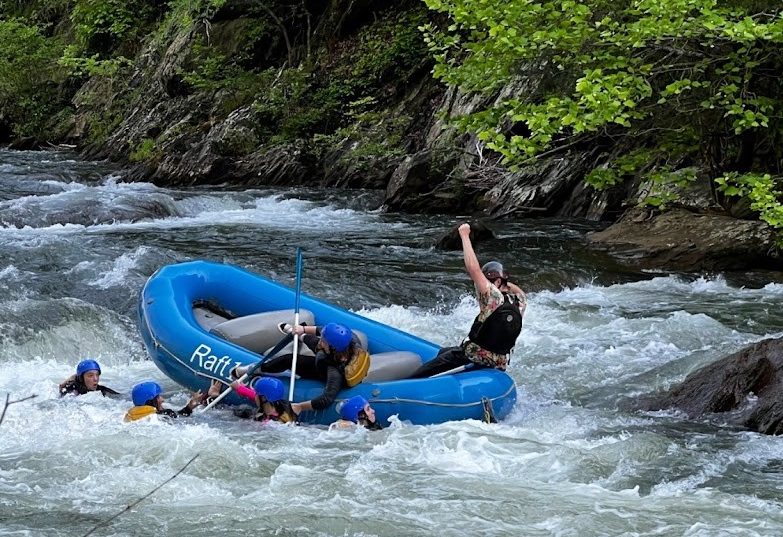
Yes, people do fall out of rafts at times. However the chances of getting injured are really low. You see, rafting guides stay with you for two reasons: safety and fun. Moreover, life jackets or personal floatation devices (PFDs) are another safety measure that ensures you are safe and sound.
So, why do people fall from a raft? There are various reasons to blame, but the most obvious one is rapids. These mischievous waves love to throw people off balance and are what adds to the fun of rafting Ocoee. Another common reason is not paying enough attention to your guide’s instructions.
Now that you know falling from a raft is a rare occurrence, it’s time to learn what you should do if someone falls overboard.
If you fall off the raft, stay calm. Instead of flailing around, try to keep yourself afloat. Your guides are trained to rescue you and handle these situations. They will act quickly and give you instructions on what your next step should be. However, your safety is a team effort. To ensure your safety and make rescuing smoother, here are a few things you should do if you fall overboard into the water:

Your first instinct should be to grab the raft. The closer you are the easier it is to rescue you. Get hold of the raft or something attached to it. Also, remember never to let go of your paddle. You can use it as an extension of your body and extend it toward the raft for your team to grab and save you.
Here is a bonus tip: always point the rear part of the paddle away from you.
If you can’t get closer to your raft then look for other rafts that are nearby. You can also swim to the shoreline if it’s closer. Point your feet downstream and above the water surface. Swim with the current and when you see the chance swim towards the shore. Watch out for obstacles and crawl all the way out once you reach the land.
The famous phrase “Go with the flow” was probably made for this situation. You need to swim downstream with the river’s current. Point your feet downstream and lay on your back. In this position, you can see incoming obstacles and dodge them. Also, your feet would be able to absorb any impact if you happen to collide with an obstacle.
A safety rope is like a hand reaching towards you to pull you out from the dangers. Latch on to that rope. You should be near the raft for the guide to throw the safety rope also when you grab the rope face towards the raft. It makes it easier to pull.
Keeping your eyes towards downstream broadens your vision. You can see incoming obstacles and look towards your guide for instructions. This position not only protects your head from any incoming danger but also allows you to react quickly.
Feet entrapment is one of the biggest risks associated with falling in water. Riverbed contains a lot of rock and debris, and your feet may get trapped. Point your feet downstream and keep them above the water’s surface. This position will keep your feet away from any danger.

When you fall into a river, the currents are strong and may get disrupted often. Due to this, you may lose sense of direction and not know where you are heading towards. You can either end up closer to the raft or away. If you are not close to the raft things may seem a little tricky but they are not. So, what actions should you take when someone falls overboard and drifts away? Or you yourself. These guidelines will help you to safely get back on the land.
We know that falling in a river equals loads of panic. However, as long as you are calm, you can prevent poor decision-making. So, calm down and assess your situation. Look for any other raft near you and calculate your distance from the shore.
We know that falling in a river equals loads of panic. However, as long as you are calm, you can prevent poor decision-making. So, calm down and assess your situation. Look for any other raft near you and calculate your distance from the shore.
Swimming in a rapid is not a practical option. It will quickly tire you out. So, wait for calm waters while avoiding strong currents and any debris. Once the current is not strong, swim towards a safe area.
If getting back on the raft is not an option then swim towards the shore. Instead of moving against the current, use the current to your advantage and swim diagonally. This will help you conserve your energy and safely reach the shore.
You don’t know how long you’ll be in water. Therefore, saving your energy is crucial. Use your energy wisely for critical situations only. Watch out for obstacles and make your way to safety.

When you find yourself in the water unexpectedly, knowing the right moves can make all the difference. But, there is something even more important- understanding what not to do. Even if you follow all the safety guidelines, there is always a chance of making a mistake. Avoiding these mistakes will ensure your safety even more.
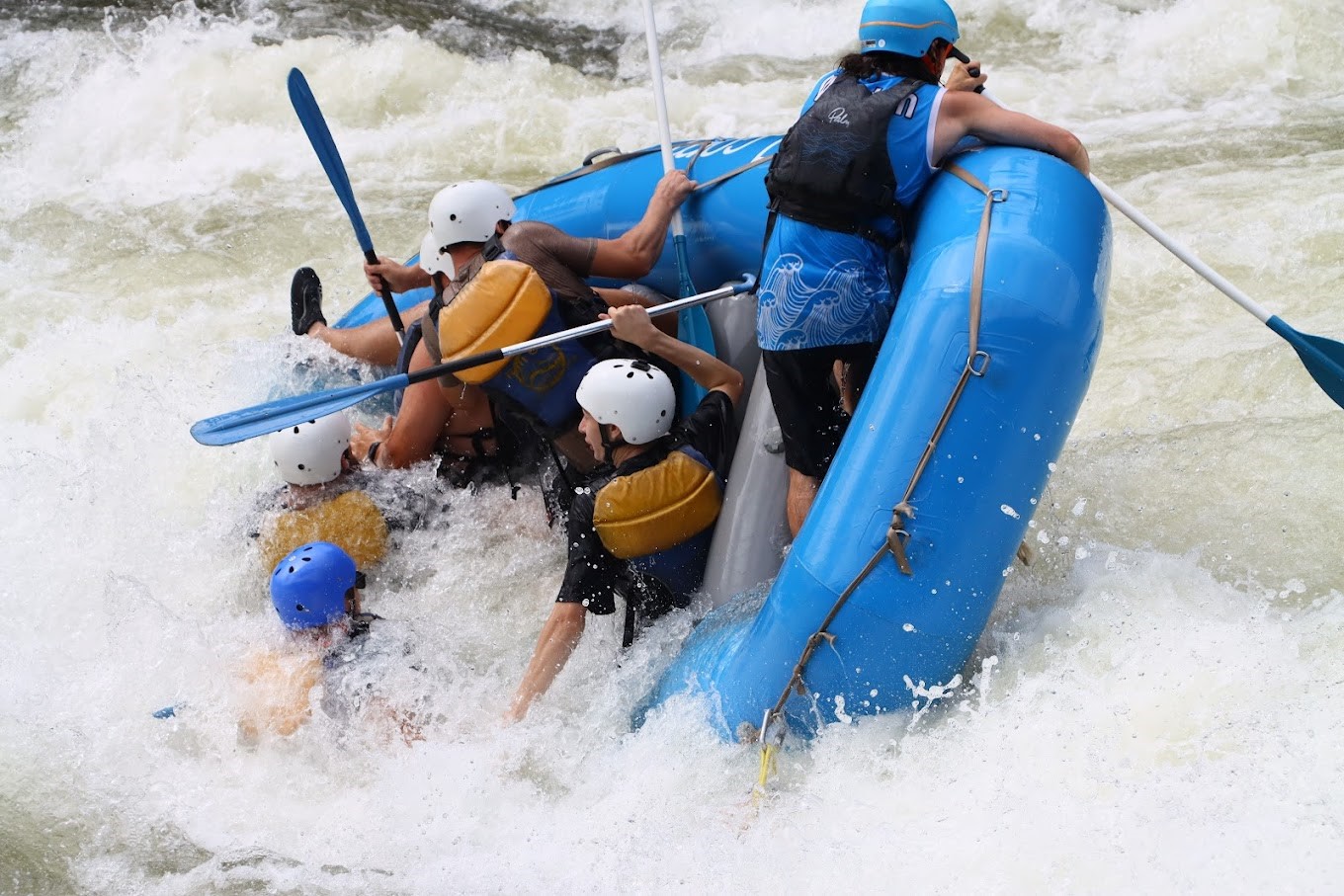
Understanding what actions you should take when someone falls overboard is important for a safe and enjoyable ride. Can you swim in the Ocoee River? While swimming might not always be allowed during your rafting trip, your guides will ensure your safety. Rafting is all about having fun, so keep these tips in mind, stay calm, and trust that your guides will protect you at all times.
With these safety protocols, you are ready to hit the rapids. Gear up, grab your paddle, and rally your crew to the white waters. Book your trip today with RaftOne and experience an exciting yet safe rafting trip.